
Earlier signals. Calmer support.
Know when stress is rising. Respond before it escalates.
PaShield is a screenless wearable system designed to help parents and caregivers recognize rising stress in neurodivergent children and respond earlier.
Prototype in development · Built with caregiver input
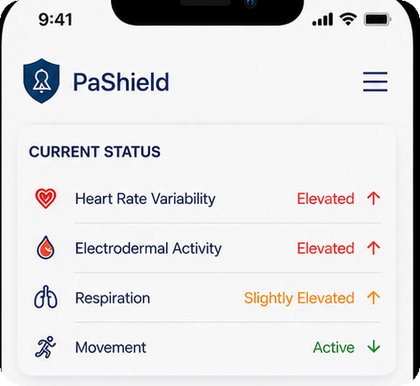
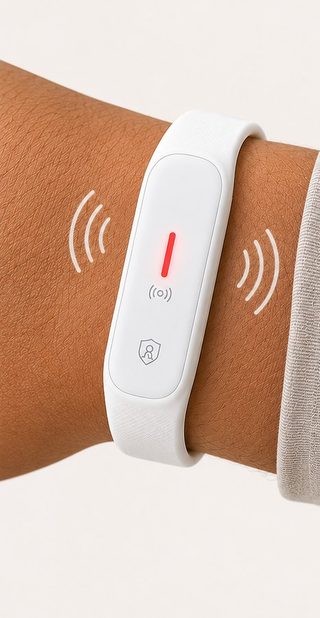
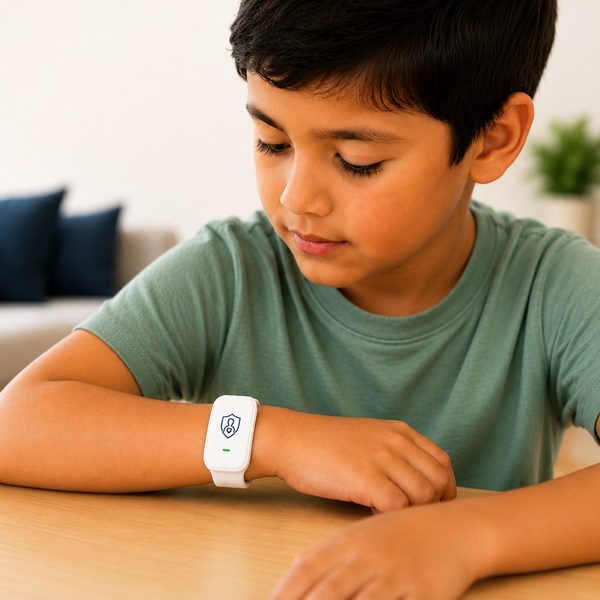
Child wearable + caregiver alert band + companion app
Child's signals change
PaShield recognizes a personalized pattern
Caregiver receives a discreet alert
Caregiver responds earlier
Early distress can be difficult to see.
A child's stress can begin rising before the outward signs become obvious. By the time a caregiver notices the change, the child may already be overwhelmed.
Stress can begin before visible behavior changes.
Some children cannot easily communicate that they are becoming overwhelmed.
Once distress escalates, caregivers may have fewer calm options available.
How PaShield works
From subtle signals to timely support.
-
01
Detect
The child's screenless wearable monitors changes in relevant physiological and movement signals.
-
02
Personalize
PaShield learns patterns relative to the child's individual baseline.
-
03
Alert
When multiple signals meaningfully change, the caregiver receives a discreet alert.
-
04
Respond
The caregiver uses the strategy appropriate for that child and situation.
Timing varies by child and situation. Prototype performance is currently being evaluated — this is a development target, not a validated guarantee.
The system
One system. Three simple components.
For the child
PaShield Sensor Wearable
A comfortable, screenless wearable designed to passively capture relevant physiological and movement signals.
- Screenless
- Passive sensing
- Personalized baseline
- Designed for everyday use
For the caregiver
PaShield Alert Band
A simple wearable that provides a discreet vibration without requiring constant phone checking.
- Quiet vibration
- Immediate awareness
- Simple alert levels
- Fast acknowledgment
For deeper context
PaShield Caregiver App
A lightweight companion app for alert context, pattern history, caregiver handoff, and optional response logging.
- Plain-language context
- Pattern history
- One-tap logging
- Caregiver coordination
Why timing matters
A small head start can change the response.
Earlier awareness gives the caregiver more opportunity to use the support strategy appropriate for that child.
PaShield does not tell every family to respond in the same way. It helps the caregiver notice earlier and use the strategy that works for that child.
Reduce noise, light, or stimulation
Pause or simplify a transition
Move to a familiar or quieter space
Offer the child's preferred regulation support
Alert another trusted caregiver
Why PaShield
Designed around the caregiver's reality.
Passive for the child
No screen interaction, symptom diary, or button press is required.
Quiet for the caregiver
PaShield is designed to provide a meaningful alert rather than a constant stream of raw data.
Personalized over time
The system learns patterns relative to the individual child.
Built for coordination
Caregivers can optionally record what happened and what helped.
Not just an alert
A system that learns.
Signals
Personalized baseline
Alert
Caregiver response
Recovery pattern
Improved personalization
Feeds back into a more personalized baseline
With optional caregiver feedback, PaShield can begin connecting physiological changes, surrounding context, caregiver responses, and recovery patterns.
Who it helps
Built first for families with high support needs.
PaShield is initially being developed with parents and caregivers of neurodivergent children, including children who are non-speaking, have difficulty communicating distress, or need substantial day-to-day support.
Future versions may support coordinated use across family members, respite caregivers, schools, and therapy teams.
Development status
Built with caregivers, not just for them.
We're building PaShield in direct conversation with parents, caregivers, and professional advisors — not in isolation.
Specific figures and program details will be added here once confirmed. PaShield has not received clinical validation or regulatory approval.
Join the pilot
Help shape the first PaShield pilot.
We are speaking with parents, caregivers, therapists, researchers, and organizations interested in helping us develop and evaluate PaShield.
- No medical diagnosis or health history required
- Takes about a minute to submit
- We'll only contact you about PaShield
FAQ
Questions caregivers ask first.
PaShield is currently in prototype development. We are recruiting families, caregivers, and professional advisors for early feedback and future pilot testing.
PaShield is being designed to identify personalized physiological and movement changes associated with rising stress. It does not guarantee that every escalation will be detected or that every alert will lead to a crisis.
No. The child's wearable is designed to be screenless and passive.
No. The PaShield Alert Band is designed to provide a discreet vibration when caregiver attention may be helpful.
PaShield is a prototype under development and is not intended to diagnose, treat, cure, or prevent any disease or medical condition.
No. PaShield does not replace caregiver supervision, emergency services, or professional medical care.
PaShield is being designed around data minimization, caregiver control, and secure information handling. More detailed privacy information will be published before pilot deployment.